
 BACK
BACK

May 2026 Garden Report
By Thea Hegland, Plant I.D. Supervisor
Lush, beautiful and enchanting May is here with its majestic emerald backdrop.
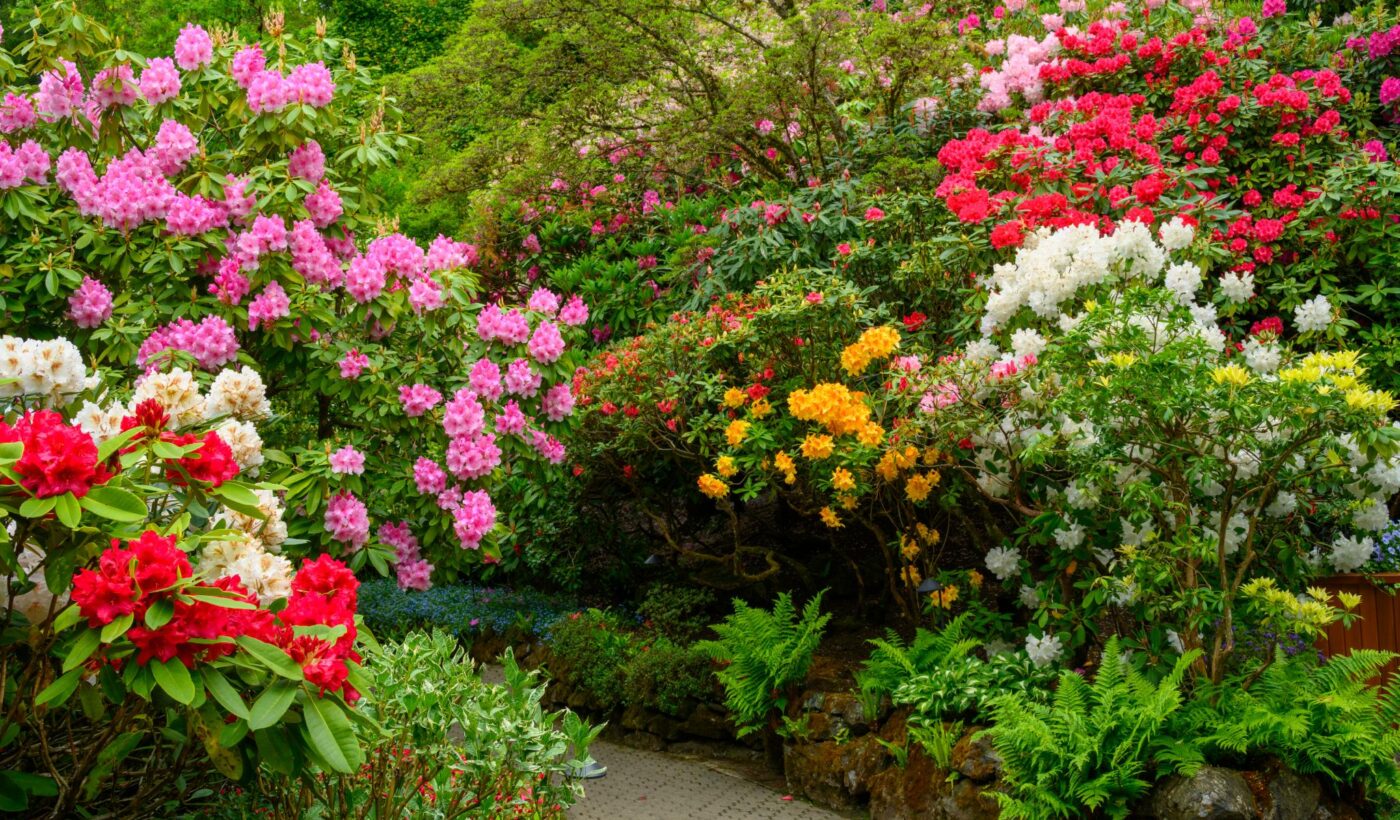
For Rhododendron enthusiasts, May is the prime season for a feast of colourful blooms. The impressive collection at The Gardens has been carefully acquired for over a century, and now includes over 350 varieties amongst over 2000 shrubs. Many of the first Rhododendron on the grounds were purchased and planted by Jennie Butchart herself. Some of those original shrubs are the largest and most impressive on the grounds and still remain in their original locations. Old handwritten nursery orders date back to the early 1900s and note some of the oldest varieties found throughout the grounds. Now considered somewhat rare, beauties such as ‘Mother of Pearl’ with soft pale pink blooms fading to white and ‘Chevalier Felix de Sauvage’, a pretty pink bi-colour with burgundy markings, are amongst the original plantings.
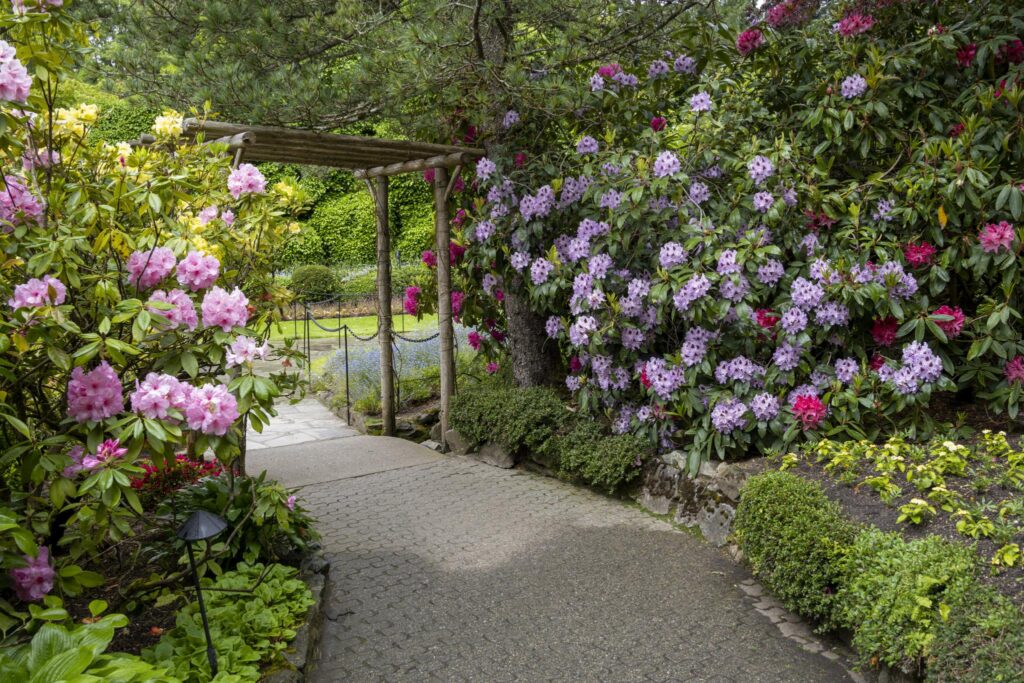
The fascinating history of Rhododendron’s date back to the early 1600s, and there are now some 28000 registered cultivars. The name derives from the Ancient Greek words rhodon, meaning “rose,” and dendron, meaning “tree”; hence the common name, Rose tree. The old legends of the Rhododendron are laced with folklore, myth and medicine. The celebrated Rose tree flower is symbolic of many true virtues: resilience, beauty, trepidation, and pure love.
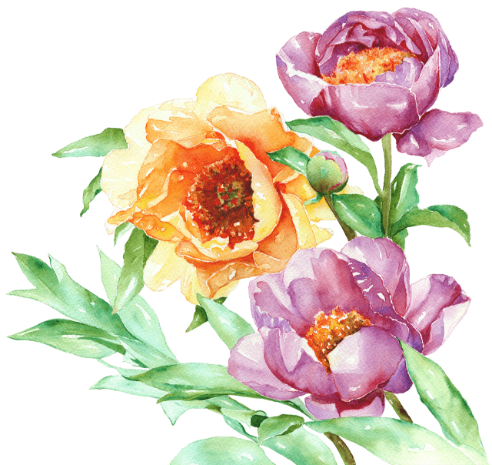
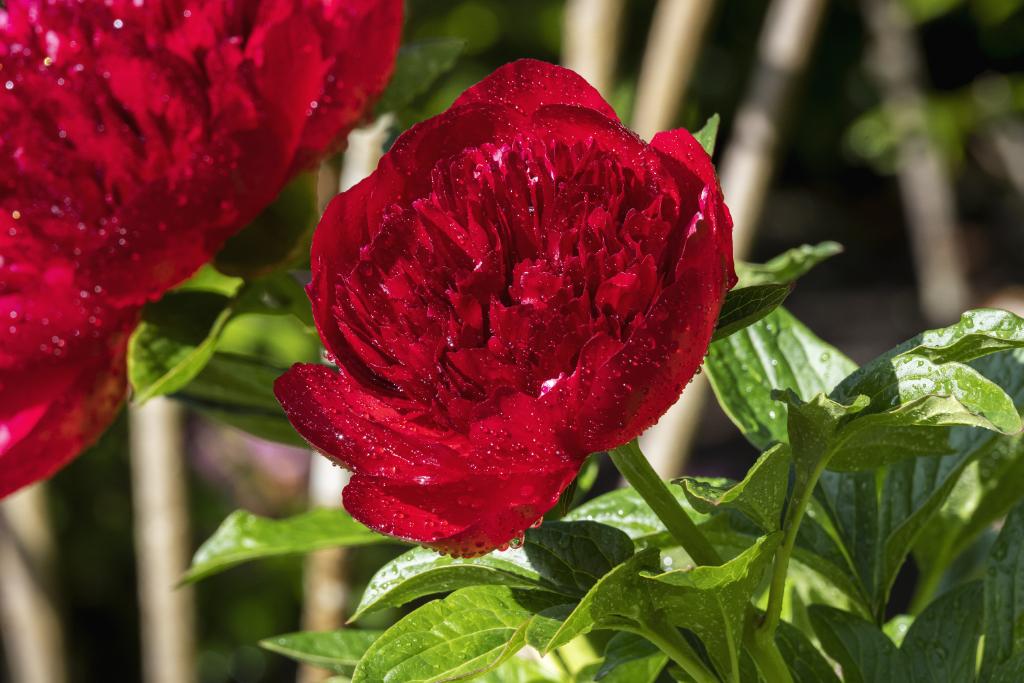
Soon, the parade of gorgeous Paeonia flowers will bloom along the many perennial borders here at The Gardens. The beautiful ‘Red Charm’ with multi layers of silky petals will be the first to bloom amongst a collection of more than 60 different cultivars. Other notable cultivars are the ‘Bowl of Beauty’, ‘Petticoat Flounce’ and ‘Gay Paree’.
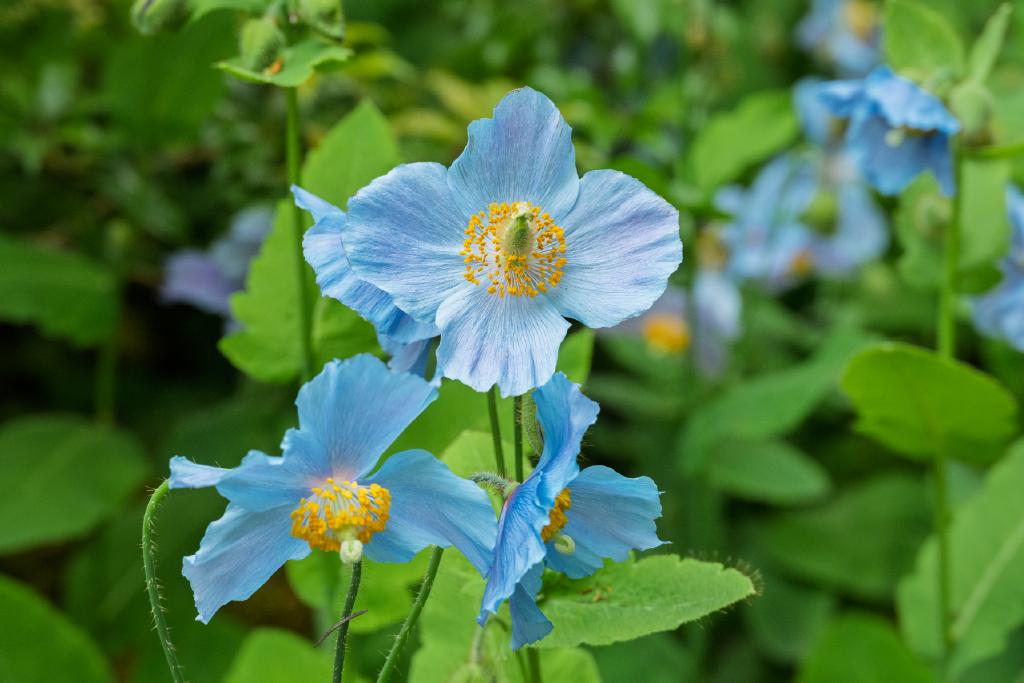
And finally, at long last, the first glimpse of our most famous flower, the exquisite Meconopsis betonicifolia (Himalayan blue poppy) will magically appear in the Japanese Garden. A true passion for advanced growers, these blue beauties require diligent care and the utmost patience to grow successfully.
Plants, trees, and shrubs that are currently blooming
- Anemone (Grecian windflower)
- Anemonella (Rue anemone)
- Anthriscus sylvestris ‘Ravenswing’
- Arabis
- Arisarium probosicideum (Mouse plant)
- Aubrieta
- Aucuba japonica (Spotted laurel)
- Bellis (English daisy)
- Bergenia (Elephant’s ears)
- Brunnera macrophylla
- Camellia
- Caltha (Marsh marigold)
- Centaurea montana
- Cercis chinensis (Chinese redbud)
- Chaenomeles (Flowering Quince)
- Cornus nuttallii (Pacific dogwood)
- Daphne collina
- Davidia involucrata (Dove tree)
- Dicentra (Bleeding heart)
- Doronicum (Leopard’s bane)
- Epimedium (Barren wort)
- Eremurus (Foxtail lily)
- Erica (Heather)
- Erysimum (Wallflower)
- Erythronium tuolumnense (Trout lily)
- Fritillaria elwesii (Fritillary)
- Fritillaria imperialis (Crown imperial)
- Fritillaria meleagris (Checkered lily)
- Gentiana (Gentain)
- Geum
- Helleborus (Christmas rose)
- Hyacinthus
- Illicium
- Kerria japonica
- Leucojum (Snowflake)
- Lysichiton (Skunk cabbage)
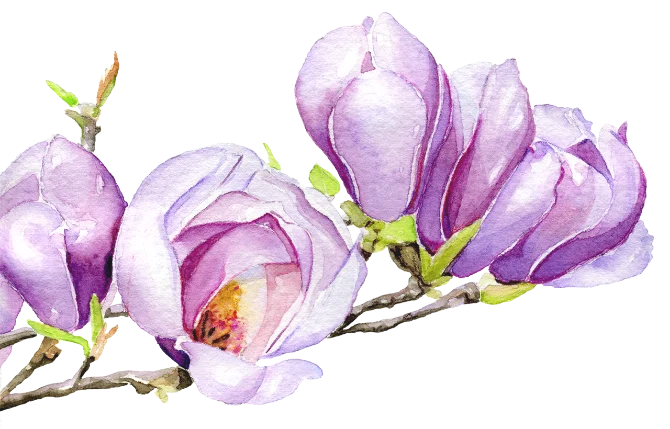
- Magnolia x soulangeana
- Magnolia stellata (Star magnolia)
- Malus (Crabapple)
- Muscari (Grape hyacinth)
- Myosotis (Forget-me-not)
- Nandina domestica (Heavenly bamboo)
- Narcissus (Daffodil)
- Ophiopogon planiscapus (Black mondo grass)
- Ornithogalum
- Pachystachys lutea (Lollipop plant)
- Pericallis (Painted daisy)
- Petasites
- Podophyllum (Mayapple)
- Pulmonaria (Lungwort)
- Pulsatilla vulgaris (Lungwort)
- Pieris (Lily-of-the valley shrub)
- Primula (Primrose)
- Prostanthera rotundifolia (Mint bush)
- Rheum
- Rhododendron
- Rubus spectabilis (Salmonberry)
- Schizanthus (Butterfly flower)
- Skimmia japonica
- Spiraea (Spirea)
- Syringa (Lilac)
- Trillium ovatum
- Trollius (Globeflower)
- Viburnum tinus
- Vinca (Periwinkle)
- Viola