
 BACK
BACK

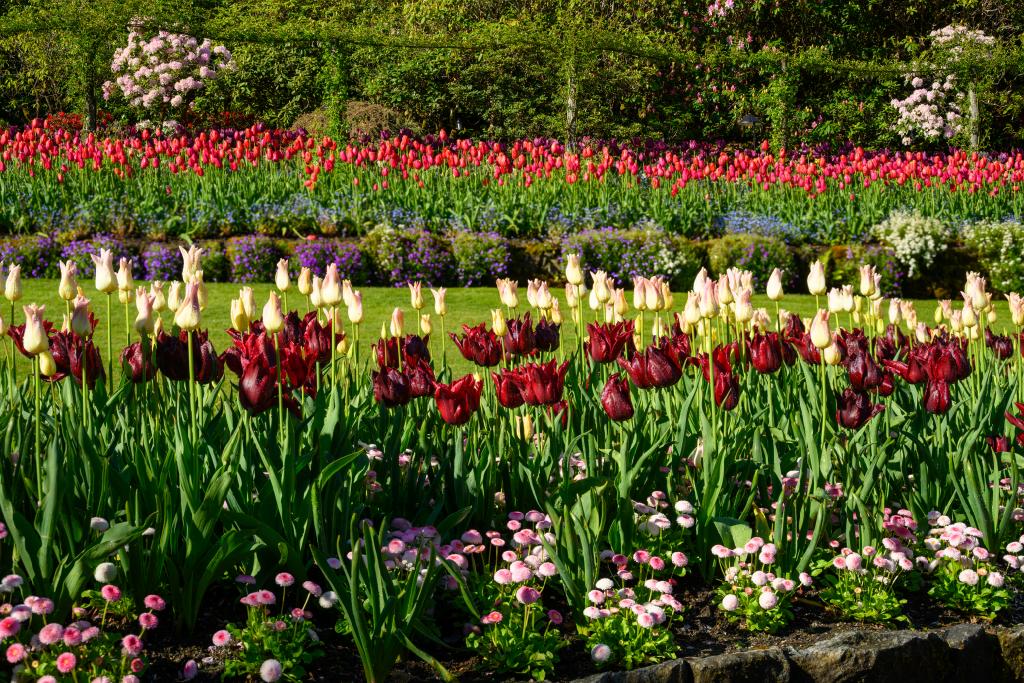
April 2026 Garden Report
By Thea Hegland, Plant I.D. Supervisor
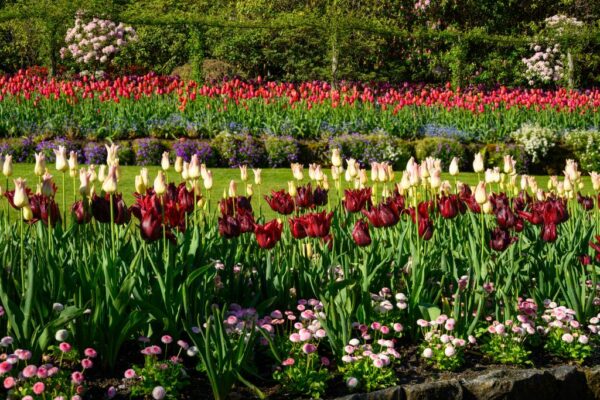
The long-awaited spring showcase has finally arrived – it is officially Tulip time! After all the tedious planting of our bulbs during the fall and the quiet lull of a long winter, the month of April is here, and it is all about the Tulips. There is nothing quite like a perfect Tulip that evokes a sense of nostalgia for yesteryear and enchantment. Everybody knows them. Everybody likes them. Our earliest memories formed during childhood take us back to a beautiful spring day when we first encountered them on an adventure outside. The vibrant colours and silky petals exude such divinity and wonderment. They are perfect, and we just can’t get enough of them.
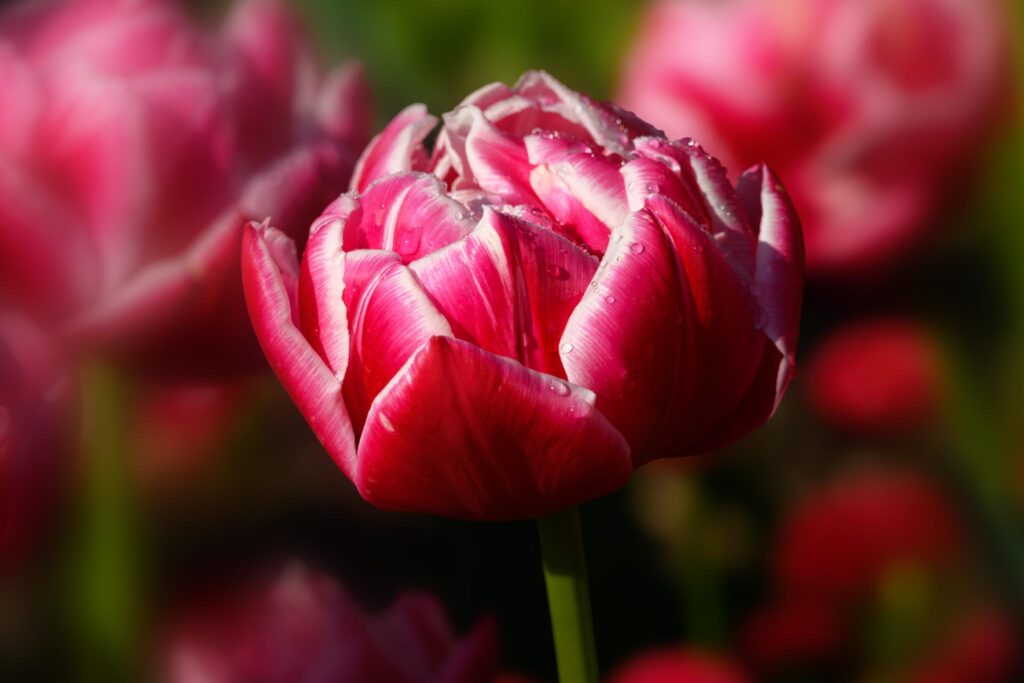
There was a time during the Dutch Golden Age when a fervor over the highly regarded Tulip flower ignited like a raging fire. Perhaps the first recorded speculative bubble, ‘Tulipmania’, saw prices of the bulbs accelerate in 1634 in a frenzy, followed by a dramatic crash in February of 1637. An unknown watercolour painter first depicted the famous ‘Semper Augustus’, the most sought-after Tulip at the time, in a renowned painting. This Tulip was the first unique variety recognized, believed to have ignited ‘Tulipmania’ with its striking, variegated petals. Believed to be limited, rare and exotic, the demand for one of these precious bulbs soared to prices equal to 3 times the annual earnings of an average merchant at the time.
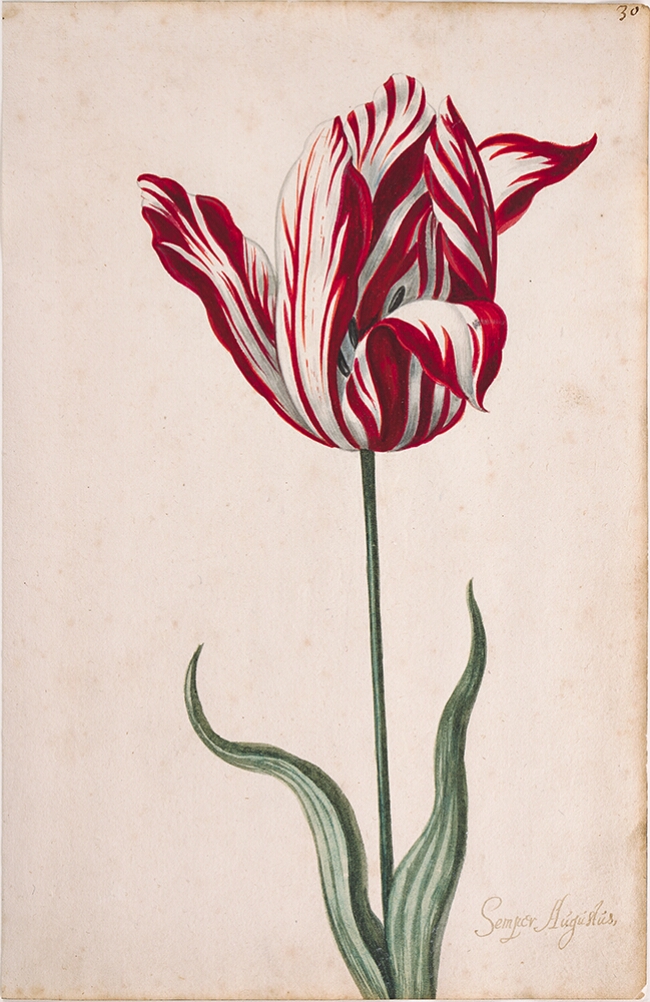
Sadly, the ‘Semper Augustus’ beauty was also a curse. Its rapid decline caused a ‘correction’ in the market after a short existence. Breeders soon discovered that new cultivars were easily achieved with the peculiar bulbs creating unique and striking colours; however, they became weak, and these varieties were short-lived. What was not known at the time is now recognized as a result of the Tulip Breaking Virus. It was the virus that created unique variations of colour, but it was also the cause of the rapid decline. The bulbs soon became so weak and were no longer able to flower. It was a blessing and a curse. Research and science have now taught the many lessons to Tulip breeders, and now there are many thousands of unique, healthy and viable Tulip varieties to cherish.
The Tulip show at The Butchart Gardens includes nearly 200 varieties amongst the 160,000 bulbs that were planted in the fall. Most of our Tulipa beds are traditionally planted with different varieties of Myosotis (Forget-me-not), which were a favourite of Jennie Butchart.
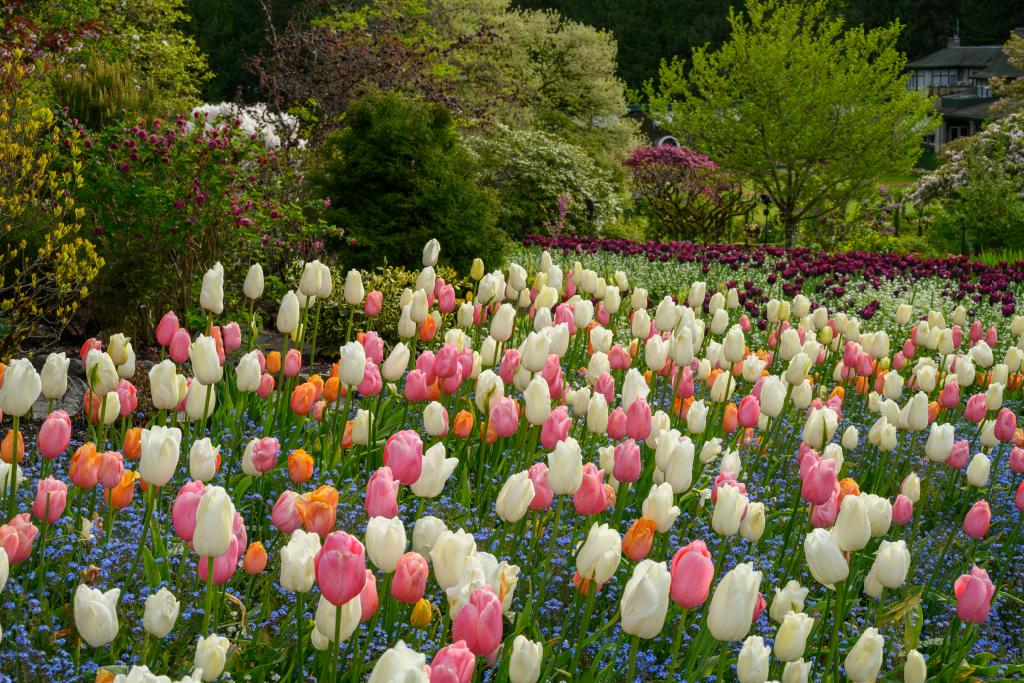
Every year, our team of designers reflect on the current display while making changes and plans for the following season. Most of our Tulips have come from Holland, some have travelled cross-country from Prince Edward Island. Our suppliers send catalogues each year, which are devoured with excitement. With Tulips, it is so hard to rein in the wants and desires. It is literally like being a kid perusing the Sears Christmas toy catalogue, checking every little picture that tickles one’s fancy. It is exhilarating. Our selection criteria follow a logical plan of choosing early, mid and late season varieties. Consideration is taken into sun or shade, what is flowering nearby and how the flow of colour will work within each area. In the end, all the best laid plans are subject to all the variables. Our variables are the substitutions, mix-ups, crop failures and pleasant surprises. The sentiments soon follow -next year will be perfect. It will be even better! Next year, next year…. and that is what Tulip fever is.
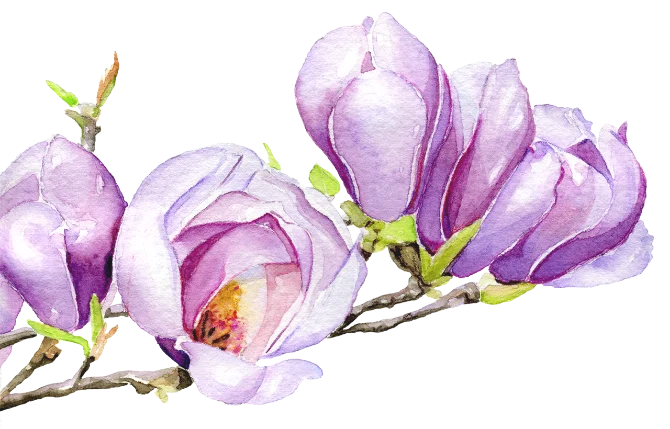
Meanwhile, the rest of The Gardens are giving some serious competition to the Tulips. Imagine a haze of Cherry blossoms blowing in the soft winds, exquisite Magnolia x soulangeana blooms, lush green grass, candy- coloured English daisies (Bellis perennis) and the beauty of emerging leaves on the deciduous trees.
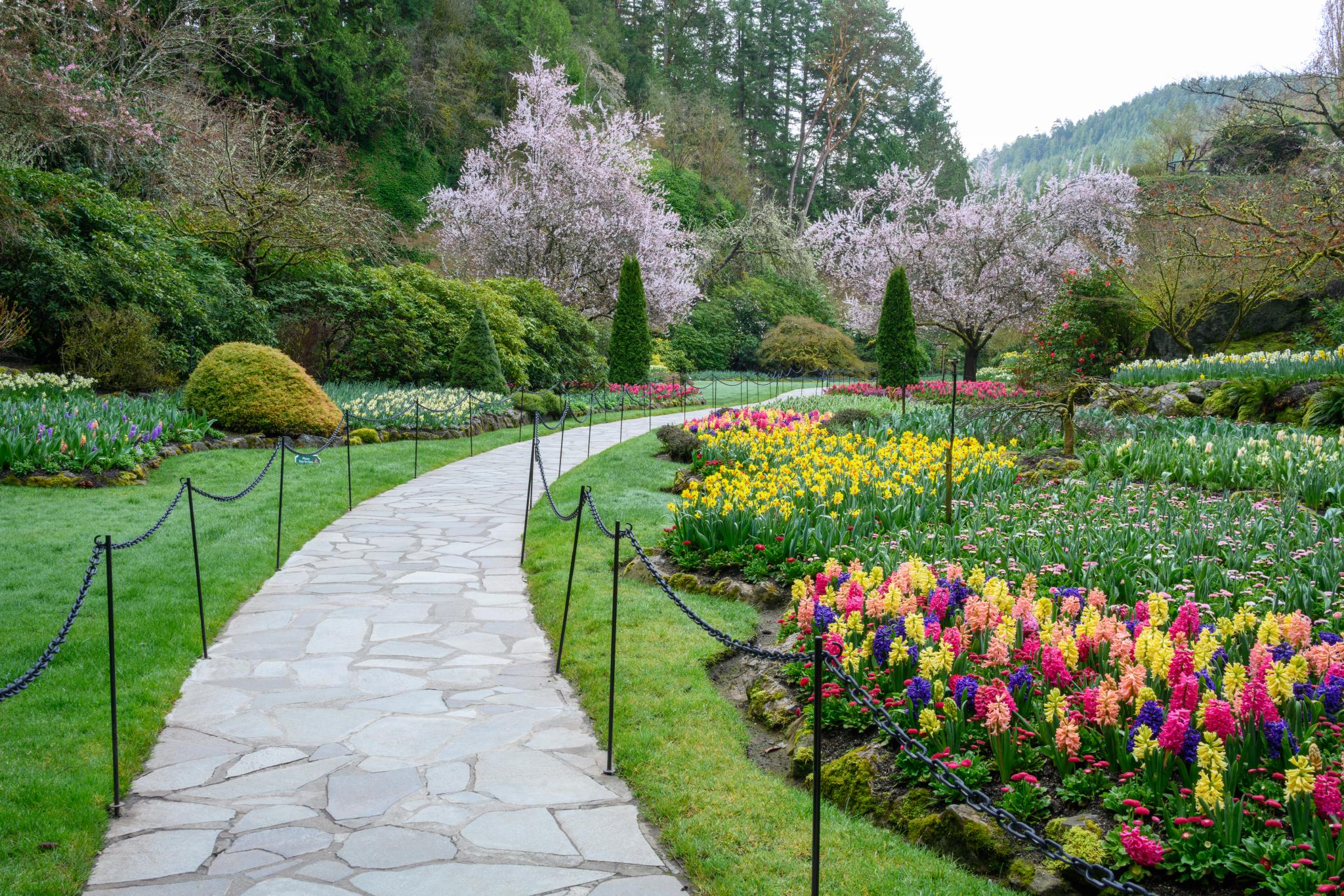
It’s all here, waiting to be explored.
Plants, trees, and shrubs that are currently blooming
- Acacia
- Amelanchier (Juneberry)
- Anemone blanda (Grecian windflower)
- Arabis
- Aubrieta
- Aucuba japonica (Spotted laurel)
- Azara
- Bellis (English daisy)
- Bergenia (Elephant’s ears)
- Brunnera macrophylla (Siberian bugloss)
- Caltha
- Camellia
- Cercis
- Chaenomeles (Flowering quince)
- Chionodoxa (Glory of the snow)
- Corydalis
- Corylopsis
- Daphne collina
- Erica (Heather)
- Erythronium (Trout lily)
- Fritillaria imperialis (Crown imperial)
- Fritillaria michailovsky
- Kerria japonica
- Helleborus (Christmas rose)
- Hyacinthus (Hyacinth)
- Heptacia nobilis
- Iberis (Candytuft)
- Iris reticula
- Lysichiton (Skunk cabbage)
- Magnolia
- Muscari
- Myosotis (Forget -me -not)
- Nandina domestica (Heavenly bamboo)
- Narcissus (Daffodil)
- Ornithogalum (Star – of – Bethlehem)
- Pieris (Lily -of – the valley shrub)
- Polyanthus (Primula)
- Pulmonaria (Lungwort)
- Pulsatilla vulgaris (Pasque flower)
- Primula marginata
- Prunus (Flowering plum)
- Rhododendron
- Rosmarinus (Rosemary)
- Ribes (Flowering currant)
- Scilla (Squill)
- Trillium
- Tulipa (Tulip)
- Viburnum
- Viola
- Vinca